
Can you live in a house during a loft conversion?
Something we’re asked a lot by homeowners is whether living at home during a loft conversion is feasible or not. The short answer is yes, in most cases. Many people choose to stay at home throughout their loft conversion project, particularly during the early stages when most of the work happens through the roof rather than inside the main living areas.
However, living at home during a loft conversion does come with some disruption. Noise, dust, access changes and temporary loss of privacy are all factors to consider. Whether you stay or move out temporarily often depends on your household setup, working arrangements, health considerations and the scope of works involved. This guide walks you through what to expect, the benefits of staying, when moving out might be the better option, and how a typical loft conversion timeline affects day-to-day life.
How disruptive is a loft conversion?
A loft conversion can be disruptive, but for most homeowners it is manageable rather than overwhelming. The level of disruption depends on the type of conversion, the age of the property, and how well the project is planned. In the early stages, disruption is mainly external, with noise from scaffolding, steel installation and roof works. Because access is usually via the roof, everyday living inside the house can continue fairly normally at first.
As the project moves forward, disruption may become more noticeable. When the staircase is installed and trades begin working inside the home, you can expect increased dust, noise and foot traffic. However, this phase is temporary and typically lasts a small portion of the overall loft conversion timeline. Experienced professionals will section off work areas, use dust protection and communicate clearly so you know what to expect each week.
Overall, while living at home during a loft conversion isn’t disruption-free, most homeowners find it far less intrusive than a full ground-floor extension or major renovation.
What to expect when staying at home during a loft conversion
Loft conversion noise
Noise is usually the biggest concern for anyone living in a house having a loft conversion. During the first few weeks, you can expect sounds from scaffolding, cutting timbers, installing steel beams and general construction activity. While the noisiest tasks are typically short-lived, they can still be disruptive – especially if you work from home or have young children.
That said, experienced loft conversion specialists plan appropriately and aim to minimise unnecessary disruption wherever possible.
Dust and mess
Loft conversion dust is another common worry. In the early stages, most work is carried out externally via scaffolding, which helps keep dust out of your home. As the project progresses and the staircase is installed, there will naturally be more interaction with your living space. Protective sheeting, sealed access points and regular clean-ups help control dust levels, but some mess can be unavoidable for a short period of time.
Access and privacy concerns
While tradespeople will need access to your property, well respected loft conversion specialists keep disruption contained to specific areas. Temporary partitions and clear boundaries help protect your privacy. Clear communication around working hours and access needs makes a huge difference when living at home during a loft conversion.
Benefits of staying at home during a loft conversion
Clear communication
Being on-site allows you to speak directly with your project manager or build team, making it easier to resolve questions quickly and avoid misunderstandings.
Reduced costs
Staying put avoids the expense of short-term rentals or extended hotel stays. When considering the overall cost of a loft conversion, accommodation costs can make a noticeable difference to your budget.
Faster decision-making
If unexpected issues arise, as they sometimes do in older properties, being at home means decisions can be made quickly, helping to keep the project on schedule.
Helps keep the project on track
Clients who remain living in the house often find their loft conversion timeline stays tighter, as there are fewer delays caused by access issues or missed approvals.
Reasons why you might choose to temporarily move out during your loft conversion
Young children or babies
Noise, dust and disrupted routines can be particularly challenging for families with very young children.
Working from home
If your job involves frequent phone calls, video calls or requires a quiet environment, loft conversion noise may become frustrating, especially during structural stages.
Health considerations
Those with respiratory issues or heightened sensitivity to dust may prefer to temporarily move out during the messiest phases.
Major plumbing or electrical work
If your loft conversion includes significant plumbing changes, such as relocating bathrooms, there may be short periods without water or power, making it less practical to stay.
Loft conversion timeline: what will each week look like?
Every project is different, but most loft conversions follow a similar pattern. Understanding the stages helps you decide whether to move out or stay at home during a loft conversion.
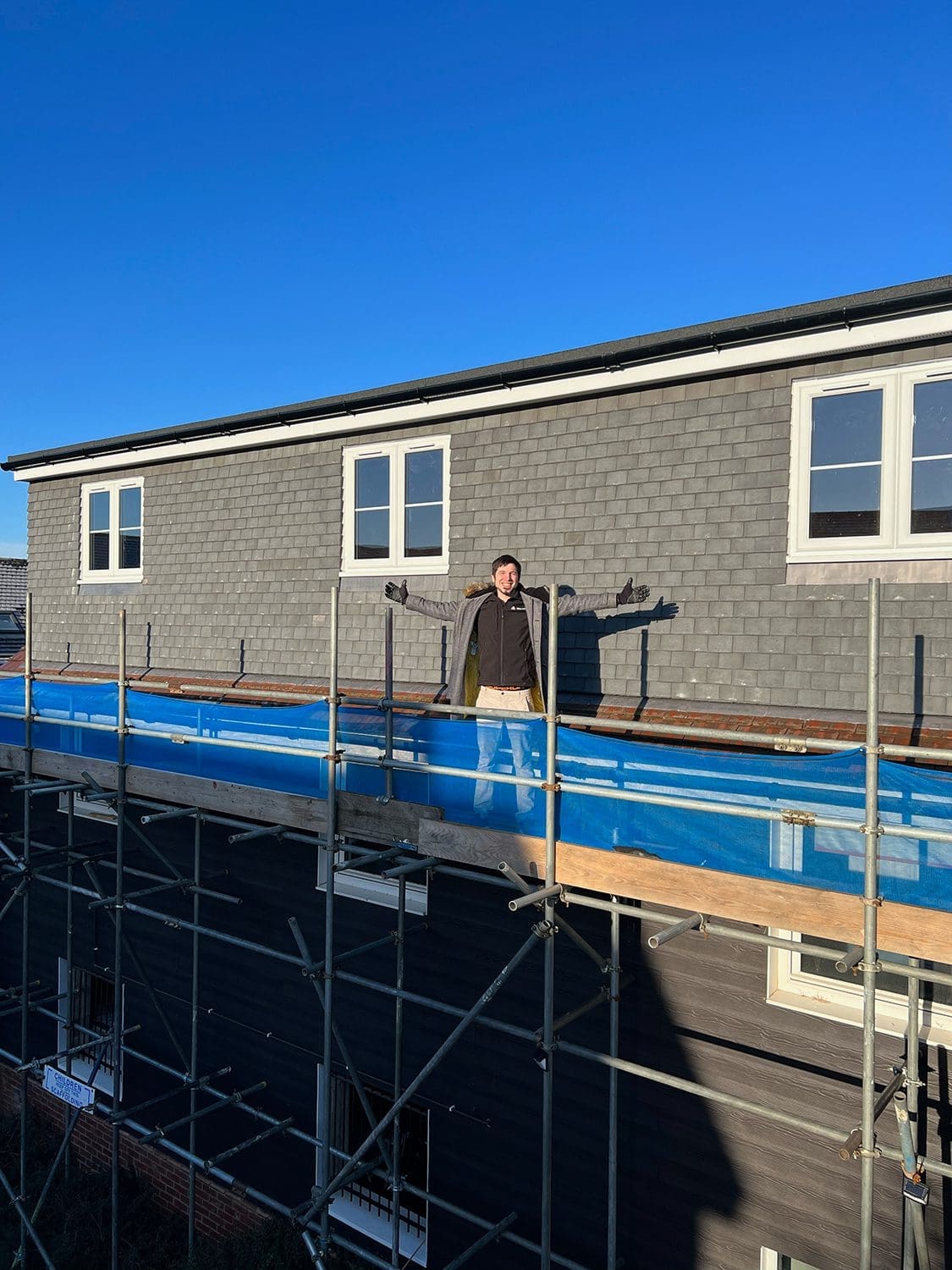
Weeks 1–2: Scaffolding and structural works
This is often the noisiest phase, with minimal impact inside the house. Disruption is mostly external.
Weeks 3–4: Floor installation and dormer construction
Noise continues, but dust inside the home remains limited.
Weeks 5–6: Staircase installation
This is when access into the existing house is required, increasing dust and disruption temporarily.
Weeks 7–8+: First fix and finishing works
Plumbing, electrics, plastering and joinery take place. Noise reduces, but trades will need more internal access.
See our loft conversion process for a more detailed breakdown of each stage and discover how a loft conversion project could look for you.
Will a loft conversion impact my neighbours?
It’s not just homeowners who worry about disruption – noise from neighbours’ loft conversions is a common concern. Most disruption to neighbours occurs during scaffolding erection and roof works.
Reputable loft conversion companies follow considerate working practices, comply with local council guidelines and communicate clearly to minimise inconvenience, noise and loft conversion dust in neighbours’ lofts. A Party Wall Agreement may also be required depending on the type of conversion or if your property is semi-detached or terraced.
Why choose The Loft Room?
At The Loft Room, we specialise exclusively in loft conversions, which means we understand how disruptive the process can feel when you’re living at home. Our approach is built around clear communication, careful planning and respectful working practices to keep disruption to a minimum.
Founded and managed by two specialist carpenters with over 30 years of industry experience, The Loft Room has completed hundreds of loft conversions to the highest standard across London and the South of the UK, picking up over 350 consecutive 5 star reviews on Google along the way.
From helping you understand whether to move out or stay at home during a loft conversion, to providing transparent guidance on timelines and the cost of a loft conversion, our team is here to support you every step of the way.
Summary
So, can you live in a house during a loft conversion? In most cases, yes – but it’s important to be realistic about noise, dust and temporary disruption. Many homeowners choose to stay, particularly during the early stages, while others prefer to move out for peace of mind.
If you’re planning or considering a loft conversion and want honest advice on whether living at home during the build is right for you, get in touch with The Loft Room today. We’ll be happy to talk through your options, answer your questions and help you plan a smooth, stress-free loft conversion.